


AI Photo Editor - Lumii
4.824.04K Reviews
App Specs
- Version
- 3.042.216
- Updated On
- License
- Free
- Downloads
- 100,000,000+
- Developer
- InShot Video Editor
- Categories
- Photography
- Platform
- Android
Screenshots
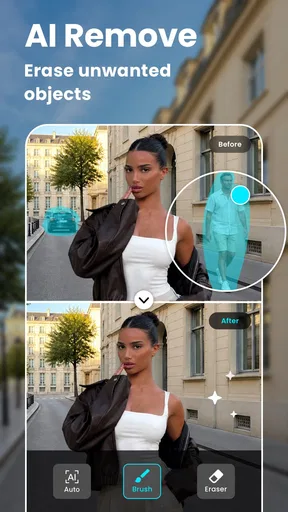


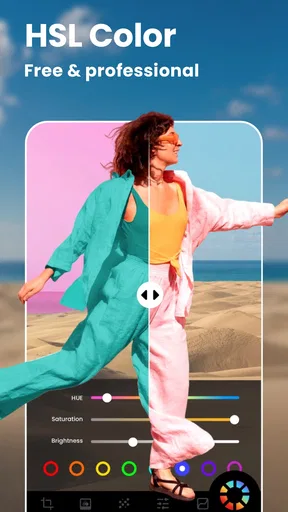
 Analysis by AppCompare
My starting point with AI Photo Editor - Lumii is usually an ordinary phone photo that feels slightly unfinished: a travel shot with flat light, a portrait that needs a little polish, or a picture whose colors don’t match what I remember seeing. I want to improve it quickly without turning a small edit into a desktop project. Lumii is a free photography app from InShot Video Editor, and its mix of automatic effects and hands-on controls makes it useful when I want both a quick starting point and room to adjust the result myself.
I find it most appealing for casual photographers, social posts, and anyone who wants more control than a one-tap filter offers but doesn’t want to learn a complicated editor first. Its average rating is 4.8 from around 992,000 ratings, and it has over 50 million installs, so it is clearly a familiar option for many mobile editors. That popularity doesn’t make it right for every job, though: I’d look elsewhere for a carefully layered professional workflow or precise retouching that depends on specialist tools.
From a quick fix to a finished photo
I like to begin with the photo’s purpose rather than the list of effects: a quick correction for a family picture calls for a lighter touch than a playful post. That small decision helps me avoid spending time trying looks that don’t suit the image. From there, I can see how Lumii’s mix of automatic suggestions and manual controls shapes the editing process.
Starting with the photo, not the effect
Right off the bat, AI Photo Editor - Lumii greets you with its sleek and user-friendly interface. It’s not cluttered, which is a huge plus in my book. You know how some apps hit you with a million options, and you’re just left wondering where to start? Not here. Everything is laid out clearly, making it super intuitive even if you’re not a tech wizard.
That uncluttered feel matters most when I’m editing on the move. I can begin with the picture I already have rather than spending time figuring out a complicated workspace. Before applying a look, I’d take a moment to check the original image: is the main issue dull color, uneven brightness, or a subject that doesn’t stand out? A quick diagnosis helps me avoid using a strong effect to solve the wrong problem. If the light is already harsh, for example, pushing contrast further may make the photo feel less natural instead of more finished.
A realistic use for Lumii is sorting out a picture after a day trip. I might have a landscape that looks washed out on my phone, while the sky and foreground need different amounts of attention. I can try an automatic suggestion as a first pass, then compare it with a lighter filter or a manual adjustment. The useful habit is to check the whole image after each change, not just the most colorful area: an edit that makes the view pop can also make skin tones or shadows look too intense.
Choosing an effect without losing the scene
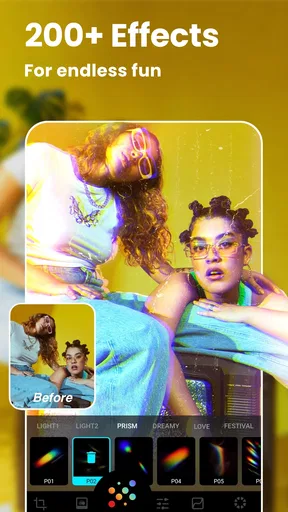
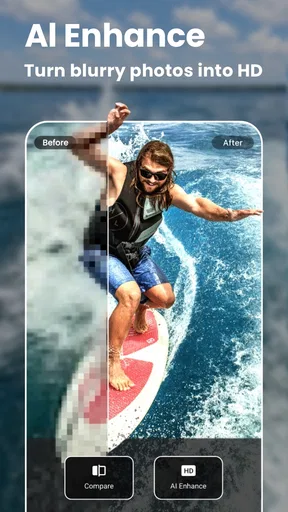
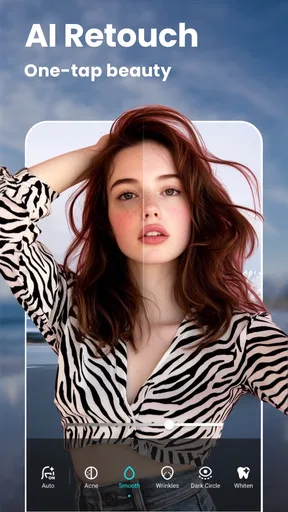
One of the first things I tried out was the AI-powered effects. The app boasts a bunch of them, and I was curious if they’d actually make a difference. Spoiler: they do! With just a tap, you can transform a dull photo into something pretty epic. The AI does a fantastic job of enhancing colors and adding depth. It’s like magic, but without the wand!
Worth Reading Before You Choose

Flipboard Shows What News Apps Must Do Beyond the Feed

Switching to Android Auto Means Rethinking Your Driving Routine

Google Calendar Makes a Crowded Week Easier to Manage

Ludo King Makes the Most of the Minutes Between Plans

Baby Panda World Brings Quick Play to Modern Phones, but Its Game Library Feels Busy

ESPN’s Live Game View Makes Following Close Games Easier
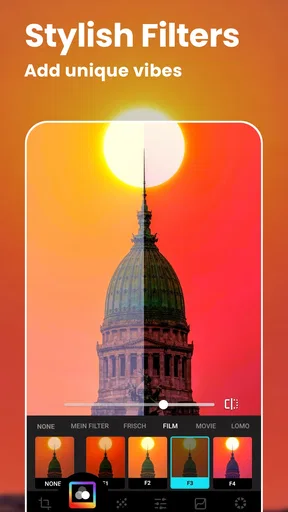
The filters are another highlight. There are tons to choose from, and they’re not your usual run-of-the-mill filters. They’ve got a unique touch that can give your photos a professional look. Whether you’re going for something vintage, modern, or just plain fun, there’s something for everyone.
My practical advice is to treat an AI effect as a draft rather than an instruction. A strong preset can make a dull image immediately more engaging, but the best-looking version is often the one where I stop before the effect becomes the main subject. For a photo of a meal or a street scene, I’d rather preserve believable colors than chase maximum drama. For a playful post, a more obvious treatment may be exactly the point. The right choice depends on where the image is going and whether I want it to look remembered, polished, or deliberately stylized.
That choice also helps when preparing a small set of photos from the same outing. Instead of picking a different dramatic filter for every frame, I’d use one general look and make modest corrections to individual images. The pictures feel more connected when they share a tone, even if each one needs a slightly different brightness or color balance. Lumii’s range gives me room to explore, but restraint is what keeps a set from looking like a collection of unrelated presets.
Making targeted manual adjustments
If you’re into manual editing, Lumii’s got your back. The app provides a range of tools that let you adjust everything from brightness and contrast to hue and saturation. What I found really cool is the gradient tool. It’s perfect for creating that dreamy effect or adding a splash of color to certain areas of your photo. And for those who love details, the sharpening tool is a game-changer.
The controls make more sense when I change one thing at a time. I’ll correct brightness first, then judge contrast, and only then decide whether the color needs a nudge. This order makes it easier to notice what each adjustment contributes. If I change brightness, saturation, and sharpening together, I can end up with a punchy image without knowing which move caused the unnatural look. A gentle pass is also easier to undo mentally: I can compare the photo with its original appearance and keep only what improves it.
The gradient tool is especially useful when I want a local-feeling treatment rather than the same wash across the entire frame. I’d use it cautiously on a sky or a background, where a gradual color change can add atmosphere without competing with the subject. It is less suited to a task that demands exact object selection or intricate masking; for that, a more specialized editor is a better fit. Sharpening has a similar trade-off: it can bring out texture, but too much can make edges look harsh, so I’d reserve it for details that genuinely need definition.
Using AI as a second opinion
Okay, so here’s where AI really shines. The app has this nifty feature where it suggests edits based on the photo you upload. It’s like having a personal editor who’s available 24/7. I tried it on a few of my travel photos, and the recommendations were spot on! It’s perfect for those times when you’re just not sure what your photo needs.
I see those suggestions as a way to get unstuck, especially when I’m tired or editing a photo I haven’t looked at closely. They can give me a direction to test, but I still decide whether it suits the subject. A recommendation that works on a landscape may not be the look I want for a portrait, and “more vivid” is not always the same as “more accurate.” If the result feels too processed, I’d back off and use the manual controls to bring it closer to the scene.
This is also where Lumii differs from a basic gallery editor. The built-in editor on a phone is convenient for a quick crop or simple correction, but it may not offer the same variety of effects and creative controls. Lumii gives me more ways to shape a picture without moving to a computer. In the other direction, a more advanced desktop or mobile editor is preferable when I need detailed layers, exact selections, or a repeatable professional process. I see Lumii as the middle ground: more expressive than a bare-bones editor, less demanding than a full production tool.
Handing the edited image back to everyday use
Let’s talk about usability. Navigating through AI Photo Editor - Lumii is a breeze. The app doesn’t lag, and the edits apply quickly, which is a huge plus if you’re working on the go. I also appreciate that it doesn’t bombard you with ads every two seconds. It’s a smooth experience from start to finish.
Once I’m happy with an edit, the next question is what I’ll do with the image. A photo meant for a social post can tolerate a more expressive look than one I want to keep as a faithful record of a family moment. I’d judge the final version at the size where it will actually be seen, then check that important details still read clearly. For a print or a crop, I’d be especially careful not to over-sharpen or push color so far that the image stops looking natural.
Another thing worth mentioning is the ability to save your edits in high quality. This is crucial if you’re planning to print your photos or use them for something more than just Instagram. The app doesn’t compromise on quality, which is a win in my book.
For a simple handoff, I’d save the edited picture and then use it wherever I normally share or keep photos. That separation is helpful: I can finish the visual work in Lumii and decide later whether the image belongs in a message, a post, or a personal collection. If I’m editing several pictures, I’d also keep the untouched originals until I’m certain I like the finished versions. That gives me a straightforward way back if a bold filter looks less appealing the next day.
Lumii is free to start, with in-app purchases ranging from $2.99 to $29.99 per item. That matters if I’m only after occasional basic edits: I can try the app before deciding whether a paid option is worth it to me. The trade-off is that some tools are reserved for the pro version, so the free experience may not cover every creative idea. I wouldn’t pay just because a locked feature is visible; I’d first identify a task I repeat often enough to justify it.
Where the workflow can break
No app is perfect, and Lumii is no exception. While it’s got a lot going for it, I did notice that some features, like the advanced blending modes, are tucked away in the pro version. It’s a bit of a tease because you can see them, but you can’t use them without shelling out some cash. However, given the app’s overall performance, it might be worth the investment if you’re serious about mobile photo editing.
That limitation is worth weighing against the kind of editing you actually do. If I mostly brighten a few pictures, test a filter, and make occasional color adjustments, I may never need advanced blending. If a particular project depends on combining effects or building a more deliberate composite, running into a locked tool can interrupt the flow. In that case, I’d compare the cost and effort of unlocking the feature with using another editor that already suits that specific job.
There’s another kind of friction that comes from having so many looks available: it is easy to spend longer auditioning effects than improving the photo. I avoid that by deciding on the goal first—natural correction, a consistent travel-photo style, or a playful social image—and limiting myself to a few candidates. That small boundary keeps the editing process useful instead of turning it into endless browsing.
For someone asking whether Lumii is beginner-friendly, I’d say yes: the clear layout and automatic suggestions make it approachable, while the manual controls give curious users something to grow into. Someone who wants every edit to happen automatically may still find choosing among effects a bit much; someone who needs precise, layered retouching may find the controls too broad. It is strongest when the job is to improve a single image quickly and creatively, not to manage a complex editing pipeline.
Who I’d recommend it to
I’d point a friend toward Lumii if they take plenty of phone photos and want a convenient step between the camera roll and sharing. It suits travel snapshots, casual portraits, food photos, and small creative experiments where a strong starting effect can save time. The app is rated for Everyone, and it runs on Android 7.0 or later; its current version is 2.016.194. Those details make it easy to judge basic compatibility before trying it, while the free entry point keeps the first step low-commitment.
I’d be more cautious about recommending it to a photographer whose work depends on exact color consistency, detailed selections, or a carefully controlled multi-image process. A specialist editor is the better choice for those priorities. I’d also skip Lumii if I only needed the simplest crop or brightness fix and didn’t care about its broader creative toolkit; the phone’s existing photo editor may be enough. The point isn’t that one approach is universally better, but that Lumii earns its place when I want its particular blend of quick suggestions, filters, and manual adjustments.
Final Thoughts
All in all, AI Photo Editor - Lumii is a fantastic tool for anyone looking to up their photo game without spending hours learning complex software. It’s powerful, easy to use, and packed with features that will make your photos pop. Whether you’re a casual user or a budding photographer, this app has something to offer. So, if you’re on the hunt for a reliable photo editor, give Lumii a shot. You might just find it’s exactly what you’ve been looking for.
My final test is simple: does the edited version still feel like the photo I wanted to keep? When Lumii’s effects and controls help me answer yes, it is a handy part of my phone-photo routine. If I need more precision than it offers, I’ll move to a specialist tool rather than fight the workflow. For everyday edits, though, I like having a quick route from an almost-there image to one I’m happy to share.
Pros
- User-friendly interface for easy editing
- Wide range of filters and effects
- Supports high-resolution exports
- Regular updates with new features
- No watermarks on exported images
Cons
- In-app purchases for premium features
- Occasional ads interrupt workflow
- Limited text editing options
- Requires stable internet for updates
- Some features need a learning curve
FAQs for AI Photo Editor - Lumii
What features does AI Photo Editor - Lumii offer?
AI Photo Editor - Lumii provides a wide range of features for enhancing your photos. These include advanced editing tools like AI-driven filters, customizable presets, and the ability to adjust brightness, contrast, and saturation. Users can also access tools for retouching, adding text, and creating stunning photo effects with just a few taps.
Is AI Photo Editor - Lumii free to use?
AI Photo Editor - Lumii offers a free version with a variety of basic editing features. However, for access to premium tools and an ad-free experience, users can opt for a subscription. The premium version includes additional filters, effects, and more advanced editing capabilities to enhance your creativity.
How user-friendly is AI Photo Editor - Lumii for beginners?
AI Photo Editor - Lumii is designed with an intuitive interface that makes it accessible for both beginners and experienced users. The app provides easy-to-follow tutorials and guides to help new users navigate its features. The AI-driven tools simplify the editing process, enabling users to create professional-quality photos effortlessly.
Can AI Photo Editor - Lumii handle RAW images?
Yes, AI Photo Editor - Lumii supports the editing of RAW images, allowing photographers to maintain high-quality image data while making adjustments. This feature is particularly beneficial for professional photographers who need to fine-tune their photos with precision and maintain the original quality of their images.
What are the system requirements for AI Photo Editor - Lumii?
AI Photo Editor - Lumii is compatible with both Android and iOS devices. It requires Android 5.0 and up, or iOS 11.0 and later. The app is optimized for smartphones and tablets, ensuring smooth performance across various devices. Users should ensure their device has sufficient storage and memory for optimal functionality.


